


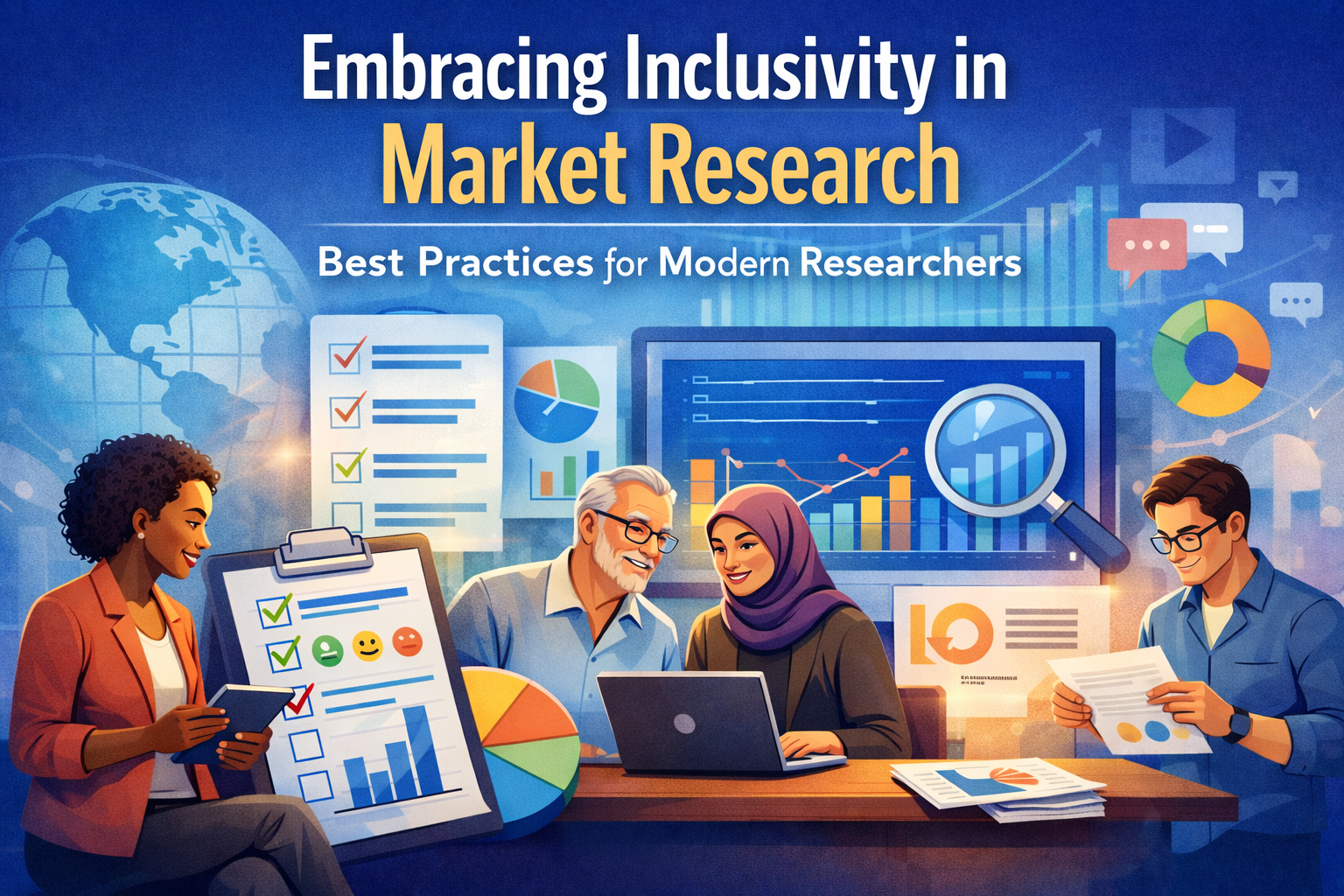
In today’s rapidly evolving business environment, inclusive market research is essential for gathering accurate and actionable insights. Brands and researchers who fail to consider audience diversity risk collecting biased data, overlooking important consumer insights, and making decisions that do not truly reflect the market. By embracing inclusivity, researchers can ensure that survey data, polls, and studies capture the perspectives of all audience segments, leading to data-driven decisions that are meaningful and impactful.
Why Inclusivity Matters in Market Research
Traditional research often focuses on majority populations, unintentionally ignoring underrepresented groups. This can result in:-
- Biased conclusions that do not represent real consumer behavior
- Poor business strategies that fail to address audience needs
- Reduced engagement and trust from survey participants
Inclusive market research ensures that every demographic and community is considered, providing reliable insights that reflect modern market research trends. By prioritizing diversity in surveys, researchers can improve audience segmentation, enhance research analytics, and strengthen overall data-driven decision-making.
Principles of Inclusive Survey Design
1. Targeted Participant Recruitment
The first step to inclusive research is ensuring your sample is representative. Best practices include:-
- Recruiting participants across gender, age, ethnicity, location, and socio-economic background
- Intentionally including underrepresented groups to avoid bias
- Using multiple channels and research panels for wider participation
Thoughtful recruitment ensures that survey methodology captures all relevant voices, resulting in high-quality audience insights.
2. Creating Respectful and Inclusive Survey Questions
The wording of survey questions greatly influences participant engagement. Inclusive design strategies include:-
- Offering multiple options for gender identity, sexual orientation, and lifestyle
- Avoiding assumptions about work, relationships, or personal preferences
- Conducting pilot tests with diverse focus groups to validate clarity
This approach not only fosters trust but also ensures that responses are accurate and actionable for consumer insights.
3. Engaging Communities for Feedback
Inclusivity requires ongoing community engagement:-
- Invite participants to review surveys for bias or cultural insensitivity
- Incorporate feedback to improve clarity and relevance
- Build trust with communities to ensure authentic responses
Active feedback loops strengthen your research best practices and improve data quality.
4. Leveraging Technology for Inclusive Research
Modern tools like QuantClix make it easier to execute inclusive research:-
- Use research panels to ensure diverse participant representation
- Apply survey methodology analytics to identify gaps or trends
- Integrate with other platforms to continuously refine inclusive survey design
Technology supports audience segmentation and helps researchers make data-driven decisions.
5. Analyzing Data Through an Inclusive Lens
Collecting diverse responses is only the first step. Proper analysis ensures insights are meaningful:-
- Segment data by demographics and identity to uncover trends
- Identify potential biases and gaps in survey design
- Adjust future surveys to ensure representative sampling
Inclusive analysis ensures that consumer insights reflect the full spectrum of the market.
6. Benefits of Inclusive Market Research
Implementing inclusive practices leads to tangible advantages:
- Reliable, actionable consumer insights for better strategy
- Greater trust and engagement from participants
- Strong alignment with diverse market needs
- Competitive advantage through adherence to research best practices
7. Common Challenges and How to Overcome Them
Inclusive research has challenges, but they can be managed:-
- Recruitment barriers: Use targeted outreach and panels to access all groups
- Survey length: Balance detail with participant convenience
- Data analysis: Leverage research analytics tools to segment large datasets efficiently
8. Sustainable Practices for Long-Term Inclusivity
To maintain inclusive research practices:-
- Update survey methodology to include emerging demographics and language standards
- Train teams on inclusive survey design and cultural sensitivity
- Monitor engagement and feedback continuously to improve audience insights
Insights for Researchers
Inclusive market research is no longer optional; it is a strategic imperative. By focusing on thoughtful participant recruitment, inclusive survey questions, community engagement, and careful data analysis, researchers can generate high-quality, actionable consumer insights.
Organizations that embrace inclusivity gain trustworthy data, stronger engagement, and data-driven decisions aligned with real market behavior. Inclusivity is both ethical and strategic, supporting sustainable growth in an increasingly diverse marketplace.
