
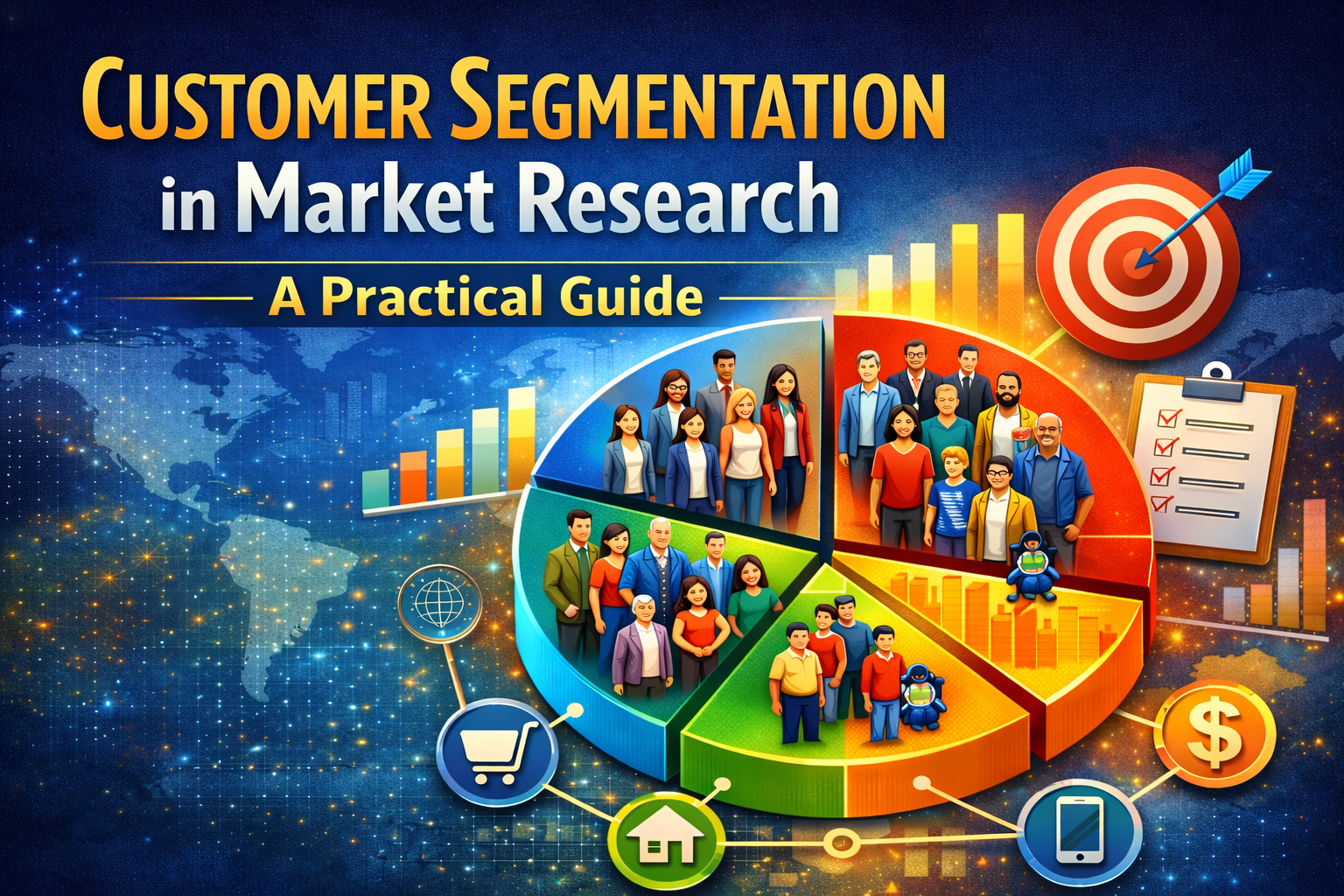
Types of customer segmentation help businesses divide audiences into meaningful groups based on shared characteristics and behaviors.
Most brands today use customer segmentation to split their audience into meaningful groups. It’s a strong strategy and an essential part of modern market research.
But here’s the reality:
Customers don’t stay in fixed segments.
They evolve and change their preferences. They shift between categories. Their behaviors vary based on trends, needs, income, life stage, and even mood.
This is where Customer Dynamics comes in.
Instead of grouping people into fixed categories, customer dynamics focuses on understanding how customers move, grow, and interact with brands over time.
Let’s explore what this means and why it matters now more than ever.
What Is Customer Dynamics?
Customer Dynamics studies how customer relationships change over time.
While customer segmentation answers the question:
“Who are our customers right now?”
Customer dynamics answers:
“How are our customers evolving, and how should we respond?”
It extends beyond basic demographic or behavioral segmentation and focuses on patterns such as:
How first-time buyers become repeat customers
How loyal customers turn into brand advocates
How engaged users become inactive
How needs shift across life stages
In simple terms, it’s about viewing customer behavior as a journey, not a snapshot.
Why Traditional Customer Segmentation Isn’t Enough
Segmentation is foundational. It helps define your target audience, tailor messaging, and improve campaign performance.
But traditional segmentation has limitations:
- It can be static
- It may rely heavily on historical data
- It doesn’t always predict future behavior
- It rarely captures emotional shifts
For example:
A customer labeled as a “High-Value Shopper” today might:
- Reduce spending next quarter
- Change preferences
- Switch to a competitor
Without dynamic insights, brands react too late.
This is why companies are moving toward data-driven insights that track movement, engagement, and changes in relationships over time.
From Segments to Relationships
Think of segmentation as organizing books in a library.
Now consider customer dynamics as tracking which books readers borrow, return, recommend, or abandon.
The difference lies in action and evolution.
When brands analyze consumer behavior dynamically, they can:
- Identify early churn signals
- Detect rising interest in new product categories
- Understand changes in purchase frequency
- Track shifts in brand perception
This turns static profiles into active customer journeys.
The Role of Market Research in Customer Dynamics
Strong market research plays a key role in understanding changing customer relationships.
Instead of running one-time surveys, brands increasingly focus on:
- Long-term studies
- Continuous feedback tracking
- Real-time consumer sentiment analysis
- Trend monitoring
These methods show how attitudes change, not just what they are today.
For example:
A brand may find that its younger audience values sustainability more each year. That’s not just a segment insight; it’s a shift in expectations.
And shifts like these are where growth opportunities exist.
Key Components of Customer Dynamics
To move beyond customer segmentation, brands should focus on these five pillars:
1. Behavioral Movement
Track how customers shift between categories:
- From prospect to first-time buyer
- From buyer to loyalist
- From loyalist to inactive
This helps predict revenue changes before they happen.
2. Engagement Patterns
Measure more than just purchases.
Consider:
- Website interactions
- Content consumption
- Survey participation
- Social engagement
These signals provide powerful data-driven insights into future behavior.
3. Lifecycle Awareness
Customers behave differently at various stages.
- New customers need education.
- Repeat buyers need rewards.
- Loyal customers need recognition.
4. Emotional & Perception Shifts
Numbers don’t tell the whole story.
Consumer sentiment, trust, and brand perception play a huge role in long-term loyalty.
Through ongoing market research, brands can identify:
- Declining satisfaction trends
- Emerging expectations
- Competitive threats
5. Predictive Insights
With advanced analytics, brands can forecast behavior shifts before they happen.
This moves strategy from reactive to proactive.
Predictive models powered by data-driven insights allow marketers to:
- Identify high-risk churn groups
- Target customers likely to upgrade
- Anticipate seasonal changes
Why Customer Dynamics Improves Business Outcomes
Moving beyond basic customer segmentation provides measurable benefits:
- Better Personalization
- Instead of targeting based only on demographics, brands personalize based on journey stage and behavior shifts.
- Higher Retention
- Early warning signals lower churn risk.
- Increased Lifetime Value
- Understanding evolving needs boosts upsell and cross-sell opportunities.
- Smarter Media Spend
- Dynamic insights help avoid wasted marketing budgets.
- Stronger Brand Loyalty
Customers feel understood, not categorized.
Technology & Customer Dynamics
Modern analytics platforms make monitoring changing consumer behavior easier than ever.
Tools today allow brands to:
- Integrate multi-source data
- Track customer journeys across touchpoints
- Visualize lifecycle movement
- Run ongoing market research studies
When combined with smart analytics, segmentation becomes fluid, not fixed.
The Future: Adaptive Marketing
The future of marketing isn’t about better categories.
It’s about adaptive relationships.
Brands that succeed in competitive markets recognize that:
- Customers are not static profiles
- Preferences change quickly
- Real-time insights matter
- Engagement is continuous
By blending traditional customer segmentation with ongoing dynamic analysis, organizations create a flexible strategy that grows with their audience.
Ready to Move Beyond Traditional Customer Segmentation?
Understanding customer segmentation is the first step.
Mastering customer dynamics is what drives long-term growth.
At Quantclix, we combine advanced market research, real-time consumer behavior insights, and high-quality audience access to help brands move from static segments to dynamic strategies.
Whether you’re refining your demographic segmentation, exploring behavioral shifts, or looking to generate deeper data-driven insights, our solutions are designed to support smarter, faster decision-making.
Ready to transform the way you understand your target audience?
Explore how Quantclix can help you build stronger customer relationships and unlock growth through intelligent audience strategies.
👉 Get in touch with our team today to start your journey.
